
If you’ve spent any time looking into marketing for your business, you’ve almost certainly come across the term “marketing funnel.” It shows up everywhere. Marketing gurus build entire courses around it. Agencies use it to justify complicated strategy documents. Social media is full of people drawing diagrams with wide tops and narrow bottoms and explaining that your leads go in one end and your customers come out the other.
Most of those explanations assume you’re running a business that serves thousands of people online, has a multi-step digital sales process, and spends significant money on ads to drive cold traffic into an automated system. If you’re a local service business in McPherson County, a lot of that framing probably doesn’t feel like it has much to do with your actual situation.
And honestly, that disconnect is part of why the term causes so much confusion and overwhelm for local businesses. Not because the concept is wrong, but because it usually gets explained in a context that doesn’t fit the way most local businesses actually work.
Here’s what a marketing funnel actually is, what it looks like when you strip away the buzzwords, and whether your business needs one.
The Concept Behind the Term
The idea of a marketing funnel is genuinely simple even if the language around it rarely is. It’s a way of describing the journey a potential customer takes from the moment they first become aware your business exists all the way through to the moment they actually buy from you and ideally keep coming back.
The reason it’s called a funnel is that at every stage of the journey, some people drop off. A lot of people might become aware of your business. Fewer of them will get interested enough to learn more. Fewer still will actually reach out or visit. And a smaller percentage of those will convert into paying customers. Wide at the top, narrow at the bottom. That’s the funnel shape.
Every business has a version of this journey whether they’ve named it or not. Someone hears about your business from a friend. They look you up on Google. They read your reviews. They check out your website. They call or fill out a form. You follow up. They book. That’s a funnel. It existed before anyone called it that, and it exists in your business right now even if you’ve never drawn a diagram or paid an agency to build one.
What a Funnel Looks Like for a Local Business
Here’s where the big-brand funnel explanations tend to lose local businesses, because the stages of a local business funnel look different from what most marketing content describes.
For a local service business in a community like McPherson, the funnel typically moves through something like this progression. First, someone becomes aware you exist. Maybe a neighbor mentions you. Maybe they find your Google Business Profile while searching for your service. Maybe they drive past your location or see a post on a local Facebook group. Awareness in a small town often happens through channels that have nothing to do with paid advertising.
Second, they get curious enough to learn more. They look you up. They read your reviews. They scroll through your website or your social media page. This is the stage where your online presence either builds their confidence or raises doubts. A thin Google Business Profile with three reviews and a website that hasn’t been updated since 2019 can lose a potential customer at this stage before they ever contact you.
Third, they reach out. They call, fill out a form, send a message, or walk in. This is where a lot of local businesses actually lose leads without realizing it, because the response is too slow, the follow-up is inconsistent, or the inquiry simply falls through the cracks during a busy week.
Fourth, they become a customer. The service is delivered. The experience either meets, exceeds, or falls short of what they expected based on what your marketing communicated.
Fifth, and this is the stage most local business marketing ignores almost entirely, they either become a repeat customer and a referral source or they don’t. What you do after the first transaction determines whether someone becomes a one-time customer or a long-term one who tells their neighbors about you.
Insider Tip from Sandy: Most of the local businesses we work with have a funnel that works reasonably well through the first four stages and then essentially disappears at the fifth. There’s no follow-up after the sale. No system for staying in touch. No intentional effort to generate referrals or repeat business. That’s not a small gap. For a local service business, the customers you already have are your most valuable marketing asset, and most businesses aren’t doing anything to activate them.
So Do You Actually Need One?
This is the question most people really want answered, and the honest response is that you already have one. What you may not have is an intentional one.
The difference between a business with an unintentional funnel and one with an intentional funnel is significant. An unintentional funnel means that people move through the stages however they happen to, with no deliberate effort to make each transition more likely or more smooth. Some people find you and convert. Others fall off somewhere along the way for reasons you’re not tracking and can’t address because you don’t know where the drop-off is happening.
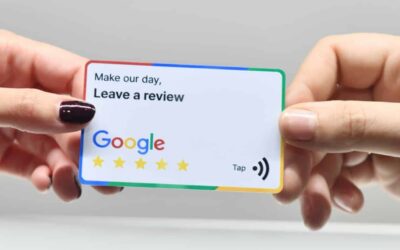
An intentional funnel means you’ve thought through each stage of the journey and made conscious decisions about what you want to happen at each one. It doesn’t have to be complicated. For a local service business, an intentional funnel might be as straightforward as this: you’re active on Google and generating reviews consistently so new people can find you and trust you. Your website has a clear call to action and loads fast on mobile so people who land there know what to do next. You respond to every inquiry within a few hours so interested leads don’t go cold. You follow up after every job to make sure the customer was happy and to ask for a review or a referral. You stay in touch with past customers through a simple monthly email so you’re top of mind when they need you again or know someone who does.
That’s a funnel. It’s not a complicated diagram or a large agency deliverable. It’s a defined, repeatable path that guides a potential customer from awareness to action to loyalty, with intentional touchpoints at each stage to make the journey more likely to succeed.
Did You Know: Research on local business purchasing behavior consistently shows that the majority of people who contact a local business have already decided they’re likely to hire someone before they ever reach out. The funnel stages that happen before the first contact, awareness, curiosity, and confidence building, are doing most of the heavy lifting. By the time someone calls you, your marketing has already either won or lost the sale.
Where Most Local Business Funnels Break Down
Understanding the concept is useful, but where it becomes practically valuable is in identifying where your specific funnel is leaking and what to do about it.
The awareness stage breaks down when your Google presence is weak, your reviews are thin, your social media is inactive, or you’re simply not showing up where your potential customers are looking. People can’t choose you if they don’t know you exist.
The consideration stage breaks down when what they find when they look you up doesn’t build confidence. Outdated information, no reviews, a website that doesn’t clearly explain what you do and who you serve, or a social media presence that went quiet six months ago all erode trust before the person ever contacts you.
The conversion stage breaks down when the inquiry response is slow, inconsistent, or nonexistent. This is one of the most common and most fixable breakdowns we see. A potential customer who reaches out and doesn’t hear back within a few hours is often a customer who hires your competitor by the time you follow up.
The experience stage breaks down when what the customer receives doesn’t match what your marketing implied. Overpromising in your marketing and underdelivering in your service creates customers who don’t come back and don’t refer anyone. The most sustainable local business marketing is built on a service experience that the marketing simply needs to accurately represent.
The retention stage breaks down when there’s no system for staying connected with past customers. In a local service business, repeat customers and referrals are often the most efficient and lowest-cost source of new revenue available. Letting those relationships go cold after the first transaction is one of the most common and most expensive missed opportunities we see in local marketing.
Insider Tip from Mark: Before you invest in any new marketing tactic, spend an hour honestly walking through your own funnel from the perspective of a potential customer who has never heard of your business. Search for your service in McPherson on Google. Look at what comes up. Read your own reviews. Visit your website on your phone. Fill out your contact form and see what happens. That exercise will tell you more about where your marketing needs work than almost anything else.
What Building an Intentional Funnel Actually Looks Like
For a local business in McPherson County, building an intentional funnel doesn’t require a sophisticated tech stack or a complicated automation system. It requires getting clear on what should happen at each stage of the customer journey and then building simple, reliable processes to make those things happen consistently.
At the awareness stage, that means an active, complete Google Business Profile, a consistent review generation process, and enough social media or content presence that people who look you up find something current and credible.
At the consideration stage, that means a website that loads quickly on mobile, clearly explains what you do and who you serve, and makes it easy for an interested visitor to take the next step. It means reviews that reflect a genuine, positive customer experience. It means a social media presence that shows you’re active, real, and invested in your community.
At the conversion stage, that means a fast, reliable response process for every inquiry that comes in, regardless of how it arrives. Phone, form, email, social media message, it all deserves a prompt, personal response.
At the experience stage, that means delivering what you promised and communicating clearly throughout the process so the customer knows what to expect and feels taken care of.
At the retention stage, that means a simple system for following up after every job, asking for reviews and referrals, and staying in touch over time through something as basic as a monthly email that provides genuine value.
None of this is rocket science. All of it requires intention and consistency. And the cumulative effect of doing all of it well is a marketing system that generates leads, converts them into customers, and turns those customers into the kind of loyal advocates who do your marketing for you by telling everyone they know.
Where to Go From Here
If reading through this makes you realize there are stages in your customer journey that are broken or missing entirely, that’s actually good information. Most local businesses are in the same position, and knowing where the gaps are is the first step toward closing them.
If you’d like help mapping out your specific funnel and identifying the highest-priority places to focus your marketing energy, that’s exactly what our free strategy sessions are designed for. We’ll walk through your customer journey with you, identify where people are falling off, and give you a clear, honest picture of where to start.
Reach out to us at ProsperIT Local Strategies. We’re right here in McPherson, and we’d love to help you build something that works.