There’s a version of this conversation we have with local businesses constantly. They’ve been in business for years. Their work is genuinely good. Their customers leave happy. And yet when you search for them on Google, they have eleven reviews, seven of which are from 2021, and three of their competitors show up above them with review counts that are three or four times higher.
It’s not that their competitors are better. It’s that their competitors have a system and they don’t.
Getting consistent reviews from happy customers is one of the highest-leverage things a local business can do for both their online visibility and their ability to convert new customers once those customers find them. And yet most businesses treat review generation as something that either happens on its own or doesn’t, rather than as something they can actively build a reliable process around.
Mark and I have helped enough local businesses work through this to know exactly where the friction is and how to remove it. Here’s the full picture.
Why Reviews Matter More Than Most People Realize
Most people understand that reviews are good to have. Fewer fully appreciate how much they influence the two things that matter most in local marketing: visibility and conversion.
On the visibility side, Google uses review volume, recency, and rating as significant factors in determining which businesses show up in local search results. A business with forty recent reviews at a solid average rating will almost always outrank a business with five reviews and a perfect score, even if every other signal is equal. This is because Google interprets review volume and recency as evidence that a business is active, legitimate, and consistently delivering a real customer experience. Thin or stale review profiles send the opposite signal.
On the conversion side, the majority of people who find your business through Google will read your reviews before they decide whether to contact you. They’re not reading every word of every review. They’re scanning for a general impression: does this business seem trustworthy, do they respond to problems professionally, and do people who are like me seem satisfied with the experience? A strong review profile answers all three of those questions before the potential customer ever reaches out, which means you’re starting that conversation with significantly more trust than a business with a weaker profile.
Did You Know: Studies consistently show that the majority of consumers trust online reviews as much as personal recommendations from people they know. For a local business, this means your Google reviews are functionally word of mouth at scale, reaching people who have no mutual connections with your existing customers and giving them a reason to trust you anyway.
Why Most Businesses Struggle to Get Reviews Consistently
The answer to this is simpler than most people expect. Happy customers don’t leave reviews because nobody asks them to.
It’s not that they don’t want to. Most people who had a genuinely good experience with a local business would be glad to share it if someone made it easy and asked directly. The problem is that the moment of highest satisfaction, right after the job is done and the customer is pleased with the result, passes quickly. Life gets busy. The thought to leave a review doesn’t surface on its own. And the longer the gap between the experience and the ask, the less likely the review becomes.
There’s also a friction problem. Even customers who intend to leave a review often don’t because the process isn’t immediately obvious. They’d have to search for the business on Google, find the review section, figure out how to leave a rating, and write something. That’s four steps more than most people will take on a good intention that isn’t being actively supported.
The businesses with strong, growing review profiles have solved both of these problems. They ask consistently, they ask at the right moment, and they make the process as frictionless as possible.
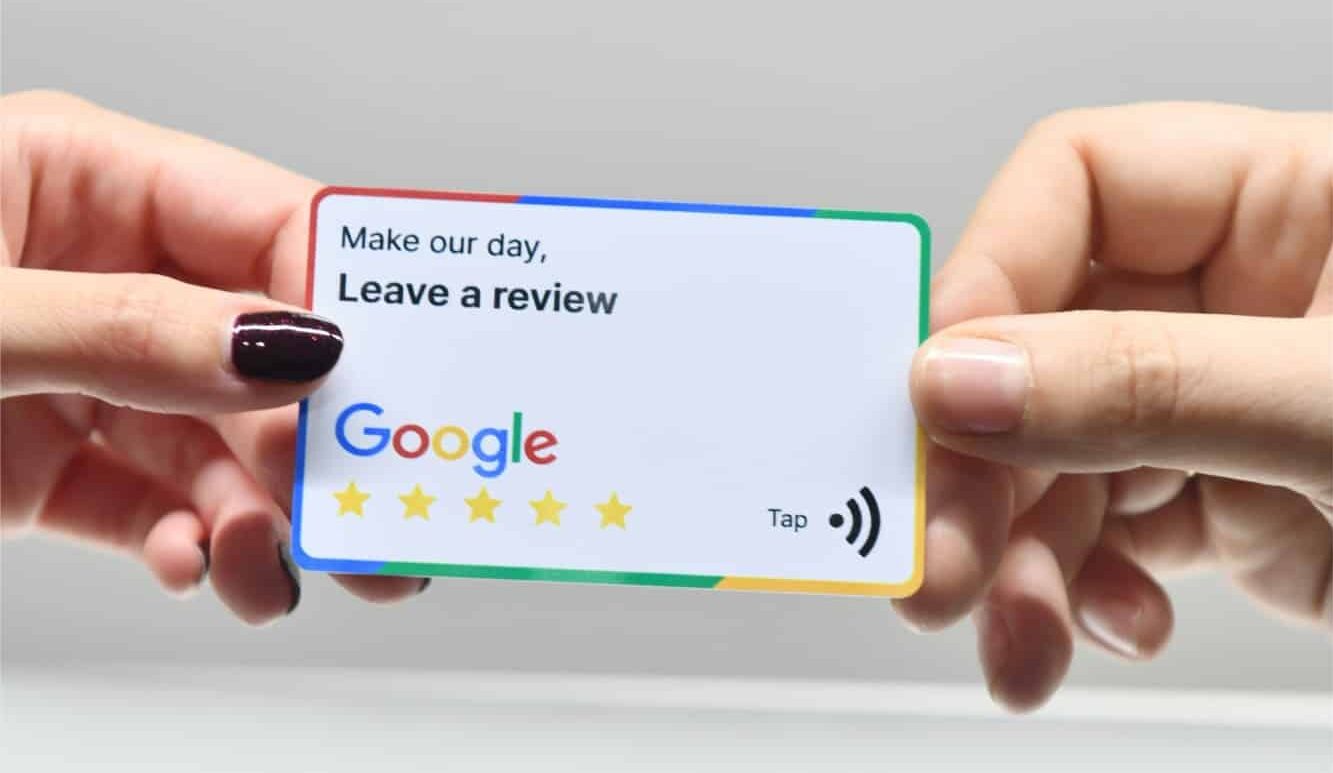
Insider Tip from Sandy: The single biggest change most businesses can make to their review generation is creating a direct link to their Google review page and using it every time they ask. When a customer has to search for where to leave a review, many of them won’t. When you hand them a direct link, most of them will. Creating this link takes about two minutes and the impact is immediate.
When and How to Ask
Timing is everything when it comes to asking for reviews, and most businesses that do ask are asking at the wrong moment.
The right moment is immediately after a positive experience, while the customer’s satisfaction is fresh, their emotional connection to the outcome is high, and the experience is vivid enough that they’ll have something genuine to say. For a service business, this typically means asking before you leave the job site, as you’re wrapping up a session, or within a few hours of completing a service.
The wrong moment is days or weeks later, when the initial satisfaction has settled into the background of the customer’s life and the memory isn’t as fresh. A review request that arrives a week after a positive experience will generate a fraction of the responses that the same request would have generated the day of.
In person is the most effective channel for the initial ask. A simple, direct, personal request from you or a team member while the customer is still in the positive emotional space of a completed experience will always outperform a text or email sent later. Something as straightforward as “we’d really appreciate it if you had a minute to leave us a Google review, it makes a big difference for our business and I can send you a direct link right now” is all it takes. Direct, genuine, and easy for the customer to say yes to.
Following up that in-person ask with a text message that includes the direct link sent the same day reinforces the intention and removes the friction of finding the review page. This two-step approach, in-person ask followed immediately by a text link, consistently produces the highest review conversion rate of any approach we’ve seen for local service businesses.
Insider Tip from Mark: The language of the ask matters more than most people think. “Would you mind leaving us a review?” is a weaker ask than “your feedback genuinely helps other people in McPherson find us, and it would mean a lot if you took a minute to share your experience.” The second version gives the customer a reason to say yes that goes beyond doing a favor. People respond to being genuinely helpful.
Building It Into Your Process
The difference between businesses that get occasional reviews and businesses that get consistent reviews almost always comes down to whether the ask is systematized or left to memory and motivation.
If the review request depends on you or a team member remembering to ask, feeling comfortable asking, and having the right moment present itself naturally, it will happen inconsistently. Some weeks you’ll ask everyone. Other weeks the ask won’t happen at all because something else was on your mind. That inconsistency shows up directly in your review volume over time.
Building the ask into your process means treating it as a defined step in your service delivery rather than an optional add-on. It might mean adding a review request to your post-job checklist. It might mean setting up an automated text that goes out two hours after every completed appointment with a direct link and a brief personal message. It might mean training any team members who interact with customers to make the ask as a standard part of wrapping up.
The specific mechanism matters less than the consistency. Whatever process you build, the goal is that every happy customer gets a review request, every time, without it depending on anyone’s memory or comfort level on any given day.
How to Respond to Reviews: The Part Most Businesses Skip
Generating reviews is only half of the equation. How you respond to them is the other half, and it’s one of the most consistently overlooked opportunities in local business marketing.
Responding to positive reviews does two things. First, it signals to Google that your profile is active and managed, which contributes to your local search visibility. Second, it shows potential customers who are reading your reviews that you’re engaged, appreciative, and the kind of business that values its customer relationships. A business that responds thoughtfully to its positive reviews feels more trustworthy than one that collects them passively and never acknowledges them.
Responding to negative reviews is even more important and considerably more delicate. A negative review that goes unanswered leaves the last word with the unhappy customer. A negative review that receives a calm, professional, empathetic response tells the story from your perspective and demonstrates to every future reader that you take your customer experience seriously and handle problems with integrity.
The guidelines for responding to negative reviews are consistent across almost every situation: respond promptly, acknowledge the customer’s experience without being defensive, apologize for any genuine shortcoming, and offer a direct path to resolution. What you don’t want to do is argue, make excuses, or dismiss the concern, because even if you’re right, the public nature of the exchange means that how you handle it says more about your business than the original complaint ever could.
Did You Know: Studies show that businesses that respond to reviews, both positive and negative, are rated more favorably by consumers than businesses that don’t respond at all. The act of responding signals that a real person is behind the business and that customer experience is taken seriously, both of which build trust with potential customers who are evaluating their options.
What to Do When Reviews Stop Coming In
Even with a good system in place, there will be periods where review volume drops, either because business is slower, because the team hasn’t been consistent with the ask, or because a stretch of customers just didn’t follow through. When that happens, a few specific actions can help restart the momentum.
A reactivation message to past customers is one option. A simple, genuine note to customers from the past year or two that mentions you’d appreciate their feedback if they’d be willing to share it can generate a meaningful response from people who already have a positive association with your business and just never got around to leaving a review.
Revisiting your ask process to identify where the friction is is another. If you’re asking consistently but reviews aren’t coming in, the problem is usually in the follow-through. Are you sending the direct link? Is the link working correctly? Are you asking at the right moment in the customer experience? Small adjustments to the process often produce significant changes in the results.
Finally, making sure your Google Business Profile is fully set up and that the link you’re sharing actually goes directly to the review prompt rather than to your general profile page matters more than it might seem. Every extra click between a customer’s intention and their completed review is a place where some of those customers will stop. The more direct the path, the higher the completion rate.
The Compounding Effect
Here’s the thing about review generation that makes it one of the most valuable marketing habits a local business can build: it compounds. Fifteen reviews become thirty. Thirty become sixty. Each new review makes your profile stronger, your search ranking higher, and your conversion rate better for every potential customer who finds you going forward.
The business that starts building this habit today will have a meaningful advantage over the one that starts six months from now, not just because they’ll have more reviews, but because those reviews will have been accumulating the trust and visibility benefits that compound over time. There’s no shortcut to a strong review profile. There’s only consistent effort applied in the right direction starting as soon as possible.
If you’d like help setting up a review generation system that fits your specific business and your team’s workflow, or if you want to talk through where your current online reputation stands and what the most important next steps are, our free strategy sessions are exactly the right place to start. We’re right here in McPherson and we’d love to help.
Reach out to us at ProsperIT Local Strategies. Let’s build something that keeps working for you.