
Picture this. You and your competitor offer the same service in the same town. You’ve been in business longer. You have better reviews from the customers you do have. Your work is genuinely good. But when someone in McPherson types your service into Google, your competitor’s name shows up and yours doesn’t.
That’s not a quality problem. That’s a visibility problem. And visibility, it turns out, is something you can actually fix.
Mark and I hear some version of this story regularly from local business owners. Someone found us after realizing their competitor was dominating Google search results while they were invisible. Someone else had been paying for ads for two years and had no idea why the organic search results, the free ones, weren’t showing anything. And honestly, when we first started our own businesses, we didn’t understand it either.
Local SEO sounds technical. It sounds like something you need a computer science degree to figure out. It’s not. It’s a system, and like most systems, once you understand the logic behind it, it starts to make a lot of sense.
This is the framework we walk every new client through. We’re sharing it here because we believe that an informed business owner makes better decisions, and because if you’re going to invest in local visibility, you should understand what you’re actually investing in.
What Local SEO Actually Is (In Plain English)
SEO stands for search engine optimization. Local SEO is specifically about helping your business show up when people nearby are searching for what you offer.
When someone in McPherson types “plumber near me” or “best hair salon in McPherson KS,” Google is doing a fast calculation to figure out which businesses are the most relevant and trustworthy results for that person. Local SEO is the work you do to make sure Google’s answer includes you.
It’s different from broader SEO in one important way: you’re not trying to compete with every business in the country. You’re trying to be the most visible and credible option in your specific area. For a local business, that’s a much more winnable game.
Did You Know: Studies consistently show that the vast majority of people who search for a local business on their phone visit or contact that business within 24 hours. The people searching for your service right now are ready to act. The question is whether they can find you.
Step 1: Claim and Complete Your Google Business Profile
If there’s one thing you do after reading this, let it be this.
Your Google Business Profile (formerly Google My Business) is the listing that shows up on the right side of Google search results and in Google Maps. It shows your business name, address, phone number, hours, photos, reviews, and more. It’s often the first impression a potential customer gets of your business.
And it’s free.
A complete, active Google Business Profile is the single most powerful local SEO tool available to a small business, and an enormous number of local businesses either haven’t claimed theirs or have claimed it and left it half-finished.
Here’s what a complete profile looks like. Your business name, address, and phone number are accurate and consistent. Your hours are current, including holiday hours when relevant. You’ve selected the most accurate primary category for your business. You’ve added photos, real ones, of your location, your work, and your team. You’ve filled out the services section. You’re posting updates regularly. You’re responding to reviews.
Compare that to the business profile that has a name and a phone number and hasn’t been touched in three years. Google notices the difference. So do customers.
Insider Tip from Sandy: We’ve seen this single step alone move businesses meaningfully up in local search results. Before you do anything else, claim your Google Business Profile, complete every section, and then make a habit of logging in at least once a month to keep it fresh.
Step 2: Get Your NAP Consistent Everywhere
NAP stands for Name, Address, and Phone Number. It sounds simple, but inconsistent NAP information across the internet is one of the most common and damaging local SEO mistakes we see.
Here’s why it matters. Google pulls information about your business from dozens of sources across the web, not just your own website. Yelp, Facebook, your local Chamber of Commerce directory, industry listing sites, data aggregators, and more. When those sources say different things, Google gets confused about which information is accurate. And confused search engines are cautious search engines. They’d rather show a competitor with consistent information than take a chance on a business whose details conflict.
This happens more than you’d think. A business moves locations but only updates their website. A phone number changes but the old one is still on three directories. The business name is slightly different on different platforms, “McPherson Plumbing” here, “McPherson Plumbing Co.” there.
Do a quick audit. Search your business name on Google and see what comes up. Check your Facebook page, your Yelp listing, any industry directories you’re on. Make sure everything matches exactly, and update anywhere it doesn’t.
Step 3: Build Your Review Strategy
Reviews are one of the strongest signals Google uses to determine local search rankings. They also happen to be what potential customers look at before they ever call you. Getting more good reviews isn’t just a nice-to-have. It’s a core part of your local SEO strategy.
The most common thing we hear from business owners about reviews is that they feel awkward asking for them. We get it. It feels like asking for a favor. But here’s a reframe: if a customer had a genuinely good experience with your business, they probably want to tell someone. You’re just making it easy for them to do that.
The most effective approach is simple. Ask in person right after a positive experience. Send a follow-up text or email with a direct link to your Google review page. Make it as easy as possible to leave the review.
Responding to reviews matters too, both for SEO and for how potential customers perceive you. Respond to every positive review with a genuine thank you. Respond to negative reviews calmly, professionally, and with a clear invitation to make it right. How you handle a bad review often says more about your business than the review itself.
Insider Tip from Mark: A business with 40 reviews at a 4.6-star average almost always outranks a business with 5 reviews at a perfect 5 stars. Volume and recency matter. Make getting reviews a consistent habit, not a one-time push.
Step 4: Make Sure Your Website Speaks the Right Language
Your website needs to tell Google clearly and consistently what you do and where you do it. That means weaving location-based language naturally throughout your pages, not stuffing keywords in awkwardly, but genuinely writing for the human beings in your community while making sure the search engines can follow along.
A few specifics. Your page titles and meta descriptions, the text that shows up in Google search results, should include your primary service and your location. Your homepage should mention where you serve, clearly and naturally. If you serve multiple towns or areas, consider having individual pages for each location rather than a single generic page.
Your “About” page and “Contact” page matter more than most people realize for local SEO. These pages are often where Google confirms your business location and legitimacy. An About page that mentions your community roots, how long you’ve been serving McPherson County, and who you serve sends strong local signals.
Also make sure your full business name, address, and phone number appear on your website, ideally in the footer of every page, and that they match exactly what’s on your Google Business Profile.
Step 5: Build Your Local Citations
A citation is any online mention of your business name, address, and phone number. The more consistent citations you have across reputable directories, the more credibility Google assigns to your business information.
The ones worth prioritizing include your Google Business Profile (already covered), Yelp, Facebook, Bing Places, Apple Maps, your local Chamber of Commerce directory, and any industry-specific directories relevant to your business. A contractor might focus on Angi or HomeAdvisor. A restaurant should be on TripAdvisor. A healthcare provider should have a Healthgrades listing.
Don’t spend energy on every obscure directory that shows up in a Google search. Focus on the platforms your customers actually use and the ones with high domain authority. Consistent, accurate listings on 15 to 20 quality directories will do more for you than scattered, inconsistent listings on 100 of them.
Step 6: Create Content That Serves Your Community
This is the step most local business owners skip, and it’s one of the highest-leverage things you can do for long-term local visibility.
Blog posts, FAQ pages, and resource content that answer the actual questions your customers are searching for are powerful for local SEO. Not because of some algorithm trick, but because Google’s job is to give people the most helpful result for their search, and when your website genuinely answers the questions people in your area are asking, Google notices.
What should you write about? Think about the questions you answer every single week. “How do I know when my HVAC system needs to be replaced?” “What’s the difference between a deep tissue massage and a Swedish massage?” “How long does it take to get a custom sign made?” Those questions live in someone’s Google search bar. If your website answers them clearly, you become a trusted resource, and trusted resources rank.
Writing consistently, even once a month, compounds over time in a way that paid advertising never does. The blog post you publish today can drive organic traffic three years from now.
Step 7: Track What’s Actually Working
You can’t improve what you don’t measure. The good news is you don’t need to become a data analyst to get useful information from your website.
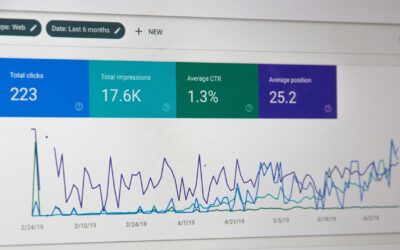
Two free tools are worth knowing. Google Search Console shows you what search terms people are using to find your website and how often you’re appearing in results. Google Analytics shows you how many people are visiting your site, which pages they’re looking at, and whether they’re taking action.
For a business just starting to pay attention to local SEO, we’d focus on three things: how many people are finding you through organic search (unpaid Google results), which search terms are driving traffic, and what pages people are landing on first. Those three data points will tell you a lot about what’s working and where the gaps are.
Did You Know: The majority of small business owners never look at their website analytics, which means they have no real idea whether their website is helping them or not. Setting up even a basic monthly review of your data puts you ahead of most of your competition.
Common Local SEO Mistakes We See All the Time
Since we’re being honest with each other, here are the patterns we see most often that hold local businesses back.
Ignoring the Google Business Profile after setup is probably the most common. You claim it, fill it in once, and never touch it again. Google rewards active, updated profiles. If yours has been sitting untouched for a year, that’s working against you.
Keyword stuffing is the opposite problem. Writing website content that reads like “best plumber McPherson KS plumbing services McPherson Kansas local plumber” isn’t going to fool anyone, especially not Google. Write for humans first. Google has gotten very good at understanding natural language.
Inconsistent business information across platforms is something we already covered, but it’s worth repeating because it’s so common and so fixable. Spend an afternoon auditing your listings. It matters.
And giving up after 60 days is perhaps the most expensive mistake of all. Local SEO is not a quick-result strategy. It’s a compounding one. Most businesses start to see meaningful movement between 3 and 6 months, with significant results building beyond that. The businesses that win at local SEO are the ones that treat it as a long-term investment, not a quick fix.
How Long Does This Actually Take?
Honestly, it depends on how competitive your local market is and how much of a head start your competitors have. But here’s what we typically see.
Claiming and completing your Google Business Profile can produce results within a few weeks. Consistent review generation starts making a visible difference within a few months. Content and citation building is a longer game, but one that pays compounding dividends. Businesses that commit to this process consistently for 6 to 12 months usually see significant improvements in where they show up for the searches that matter to them.
The important thing to understand is why local SEO compounds in a way paid ads never can. When you stop paying for ads, the traffic stops. When you stop investing in local SEO, the foundation you’ve built doesn’t disappear overnight. Your reviews stay. Your content stays. Your citations stay. The work you do today keeps working for you long after you’ve done it.
Not sure where to start?
If you’re not sure where to start or what your business actually needs, we recommend starting with our The 10-Minute DIY Search Visibility Checkup.
This isn’t a course. It’s not a webinar. It’s a 10-minute diagnostic tool that walks you through exactly how your business shows up online right now, and tells you precisely what to fix first.